


Essential Features of the Best Trails for Families
Planning a successful family hike begins with selecting a trail tailored to little legs. When children step onto a trail, their focus is entirely on immediate sensory exploration—touching rocks, watching lizards dart across sand, and jumping over roots—rather than reaching a far-off summit.
The most successful family trails share specific characteristics:
- Short Total Distance: For toddlers and preschoolers, paths between 0.5 and 2 miles round trip are ideal. This distance lets kids explore freely without feeling exhausted.
- Manageable Elevation Gain: Steep climbs quickly drain little legs. Flat paths, gradual switchbacks, or gentle downhill routes make the walk enjoyable for everyone.
- Interactive Features: Trails featuring shallow creek crossings, safe climbing boulders, hollow trees, or interpretive signs keep kids naturally engaged.
- Shade and Rest Amenities: Benches, shaded pavilions, and clear rest clearings allow families to take necessary snack and water breaks out of direct sun.
- Trail Safety and Clear Navigation: Wide paths with solid footing, visible blazes, and protective barriers near drop-offs reduce parental stress.
Before heading out, it helps to check official trail details from Clark County to verify surface materials, trailhead parking, and current conditions.
| Terrain Type | Ideal Age Group | Key Feature | Best Stroller Type | Turnaround Strategy |
|---|---|---|---|---|
| Paved Park Paths | All ages (0–12+) | Playgrounds, restrooms, lake loops | Standard or umbrella stroller | Loop completion or playground stop |
| Wetland Boardwalks | Toddlers to Pre-teens | Wildlife viewing, water features | All-terrain or sturdy standard | Dedicated observation deck |
| Desert Dirt & Sand | Ages 4+ | Rock formations, gentle switchbacks | Framed baby carrier (no strollers) | Distinct landmark or rest boulder |
| Mountain Gravel | Ages 5+ | Shaded pines, panoramic viewpoints | Rugged all-terrain jogger | Natural creek or scenic overlook |
Top Scenic Desert and Wetland Walks in Southern Nevada
Southern Nevada offers an incredible variety of family hiking terrain. From vibrant red sandstone canyons to lush wetland oases, families can discover scenic outdoor escapes right in our backyard.
Red Rock Canyon and Local Nature Escapes
Just west of the valley, Red Rock Canyon National Conservation Area provides world-class desert scenery with trails well-suited for young adventurers.
The towering crimson cliffs and ancient Aztec sandstone create a natural playground for curious kids. Trails like the Lost Creek Children’s Discovery Trail offer a gentle 0.75-mile loop where children can learn about desert ecology through illustrated interpretive signs and spot seasonal waterfall trickles tucked beneath hidden rock overhangs.
For more ideas on discovering hidden desert beauty, explore these 7 secret nature escapes around Las Vegas your kids will love this spring to experience colorful wildflower blooms, desert tortoise habitats, and panoramic mountain views.
Stroller-Friendly Paths and the Best Trails for Families with Toddlers
If you are navigating trails with infants or toddlers in strollers, wide paved routes with smooth grades make family outings easy and fun.
- Whitney Mesa Recreation Area and Nature Preserve: Features paved multi-use paths winding along geological bluffs, offering expansive valley views alongside active wildlife habitats.
- Craig Ranch Regional Park: Spanning expansive manicured grounds, this former golf course offers miles of flat, smooth paths, pond walkways, and massive playgrounds to reward toddlers after a scenic stroll.
When using strollers, stick to all-terrain joggers with larger air-filled tires on crushed gravel or packed dirt to cushion bumps and maintain traction over loose sand.
Wildlife Spotting and Nature Center Trails
Waterfowl, songbirds, and desert critters provide instant excitement for young hikers. Several local nature preserves combine gentle walking loops with rich animal observation opportunities.
- Henderson Bird Viewing Preserve: Offers miles of flat, accessible paths surrounding nine water ponds. Families can borrow binoculars to spot migrating waterfowl, desert quails, and turtles sunning along the banks.
- Floyd Lamb Park: A lush 680-acre oasis at Tule Springs featuring historic ranch structures, towering shade trees, and tranquil ponds where peacocks, ducks, and geese roam freely.
- Gilcrease Nature Sanctuary: A peaceful refuge providing easy walking grounds where children can view rescued birds, farm animals, and exotic wildlife in an educational setting.
To plan full-day outdoor itineraries with wide lawns and picnic pavilions, check our complete guide to the five largest parks in the Las Vegas Valley.
National Highlights: Iconic Family-Friendly Trails Across the Country
Families traveling across the United States can find incredible kid-tested trails that deliver iconic scenery without requiring grueling mileage.
Mountain Overlooks and Waterfall Hikes
Waterfalls and mountain overlooks are natural motivators for kids. In Maryland’s Patapsco Valley State Park, the Cascade Falls walk is under half a mile each way, leading directly to a gentle cascade where kids can safely splash in shallow water. Nearby Cunningham Falls State Park offers a flat 1-mile path to a dramatic 78-foot cascading waterfall.
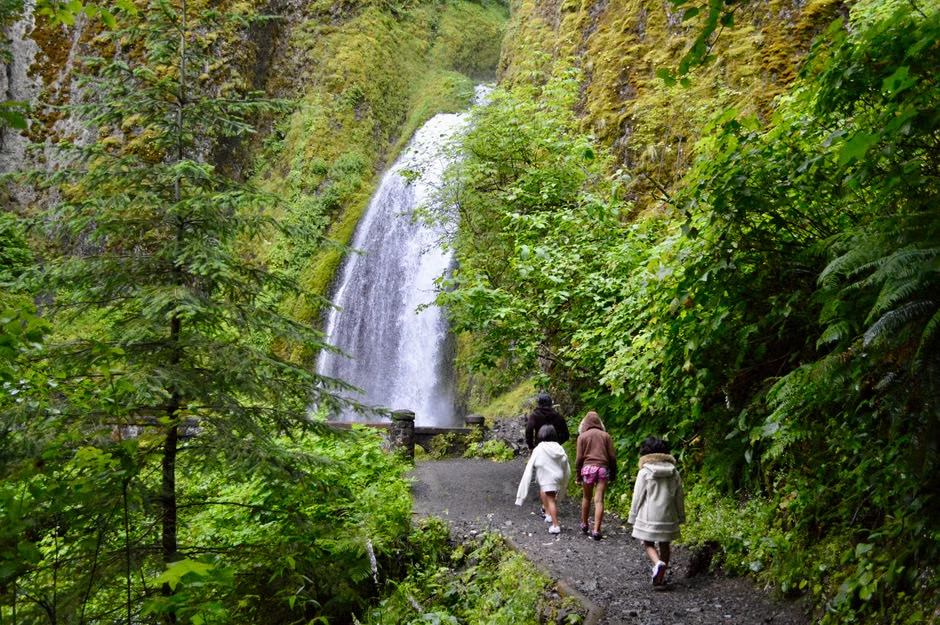
In the Mid-Atlantic, accessible scenic paths in Virginia show that you do not need steep mountain climbs to reach spectacular ridge views. Paved, tree-canopied paths allow toddlers and strollers to reach panoramic mountain vistas with ease.
Historic Cabins and Themed Discovery Walks
Historic structures and themed trails transform hikes into imaginative adventures. In the Great Smoky Mountains, the flat 4-mile roundtrip hike to the Greenbrier Schoolhouse and Walker Sisters Cabin lets kids sit in an authentic 1882 schoolhouse and explore historic pioneer cabins.
Interactive boardwalk trails also help break up distances for young children. Applying smart wetland nature loop techniques—such as using wide wooden walkways, resting frequently at observation platforms, and carrying a compact baby sling—helps parents comfortably guide toddlers through natural environments. Many parks also offer Junior Ranger activity books that turn simple nature walks into fun educational scavenger hunts.
Best Trails for Families Planning First-Time Backpacking Trips
Taking kids on their first overnight backpacking adventure builds incredible outdoor confidence when planned properly.
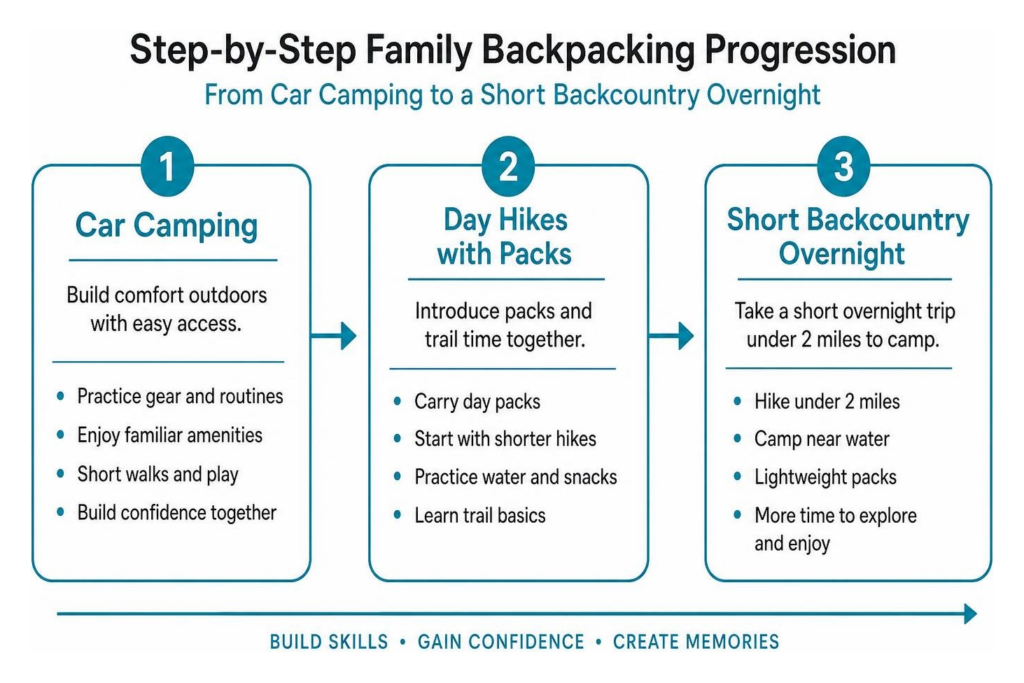
For a first backcountry trip, keep the hike under 2 miles to a designated campsite near a lakeshore or gentle stream. This keeps pack weights light and gives everyone plenty of time for camp setup, rock skipping, and campfire stories while practicing Leave No Trace principles.
Practical Tips for Stress-Free Family Hiking
A successful family outing comes down to smart preparation, good timing, and manageable expectations.
Pacing, Hydration, and Gear Essentials
In desert and mountain environments alike, smart packing ensures everyone stays comfortable and safe:
- Hydration Packs & Insulated Bottles: Kids love drinking from their own hydration bladders. Keep vacuum-insulated water bottles in your daypack with cool, electrolyte-enhanced water.
- Sun Protection: Wide-brimmed hats, UV-protective shirts, and mineral sunscreen are essential. In warm weather, wrapping a cold, damp bandana around a child’s neck works wonders to keep them cool.
- Trail Footwear: Closed-toe shoes with sturdy rubber traction prevent slips on loose gravel and sandstone.
- Compact First-Aid: Pack bandages, blister pads, antiseptic wipes, and tick/splinter tweezers.
Joining a guided community Nature Walk and Talk is a wonderful way to learn trail safety, discover native flora, and meet other outdoor-loving families in a relaxed group setting.
Motivating Reluctant Hikers on the Trail
When energy dips and footsteps slow, simple trail games can instantly change the mood:
- The “I Spy” Color Hunt: Have kids search for specific natural colors—a shiny black beetle, a bright red rock, or yellow desert blooms.
- Trail Leader Rotations: Let children take turns serving as the “Trail Guide” who spots trail markers and chooses rest stops.
- Milestone Snack Stations: Break the route into small goals (e.g., “We’ll stop for dried fruit and crackers at that big shady boulder ahead!”).
- The Beat-the-Clock Challenge: Count how many steps it takes to reach the next bend or search for funny cloud shapes in the sky.
Frequently Asked Questions About Family Trails
How far can young children and toddlers comfortably hike?
Most toddlers and four-year-olds can comfortably walk 1 to 2 easy, relatively flat miles with regular snack and water breaks. When hiking with children under three, bring an ergonomic baby carrier or ring sling so you can easily carry them if they tire out before the end of the loop.
What should families pack for a half-day nature hike?
Pack at least 0.5 to 1 liter of water per person per hour in warm weather, high-protein snacks (nuts, fruit pouches, trail mix), sun protection (hats, sunscreen), a basic first-aid kit, wet wipes, a fully charged phone with downloaded offline trail maps, and an extra change of clothes and socks in the car.
Which trail features best keep kids engaged while hiking?
Kids stay most engaged on trails that offer interactive elements rather than plain scenery. Look for paths with safe climbing boulders, shallow splash areas, wooden boardwalks, interpretive wildlife signs, and historic buildings where children can explore and play.
Conclusion
Getting outside as a family is not about how far or fast you hike—it is about creating shared memories, discovering nature together, and building confidence on the trail.
Whether you are strolling a paved wetland boardwalk or exploring sandstone rock formations, Southern Nevada offers incredible outdoor destinations for every age and skill level. Pack your water, grab some snacks, and explore the best local hiking directory to find your family’s next outdoor adventure!