

Essential Camping Activities for Families by Age Group
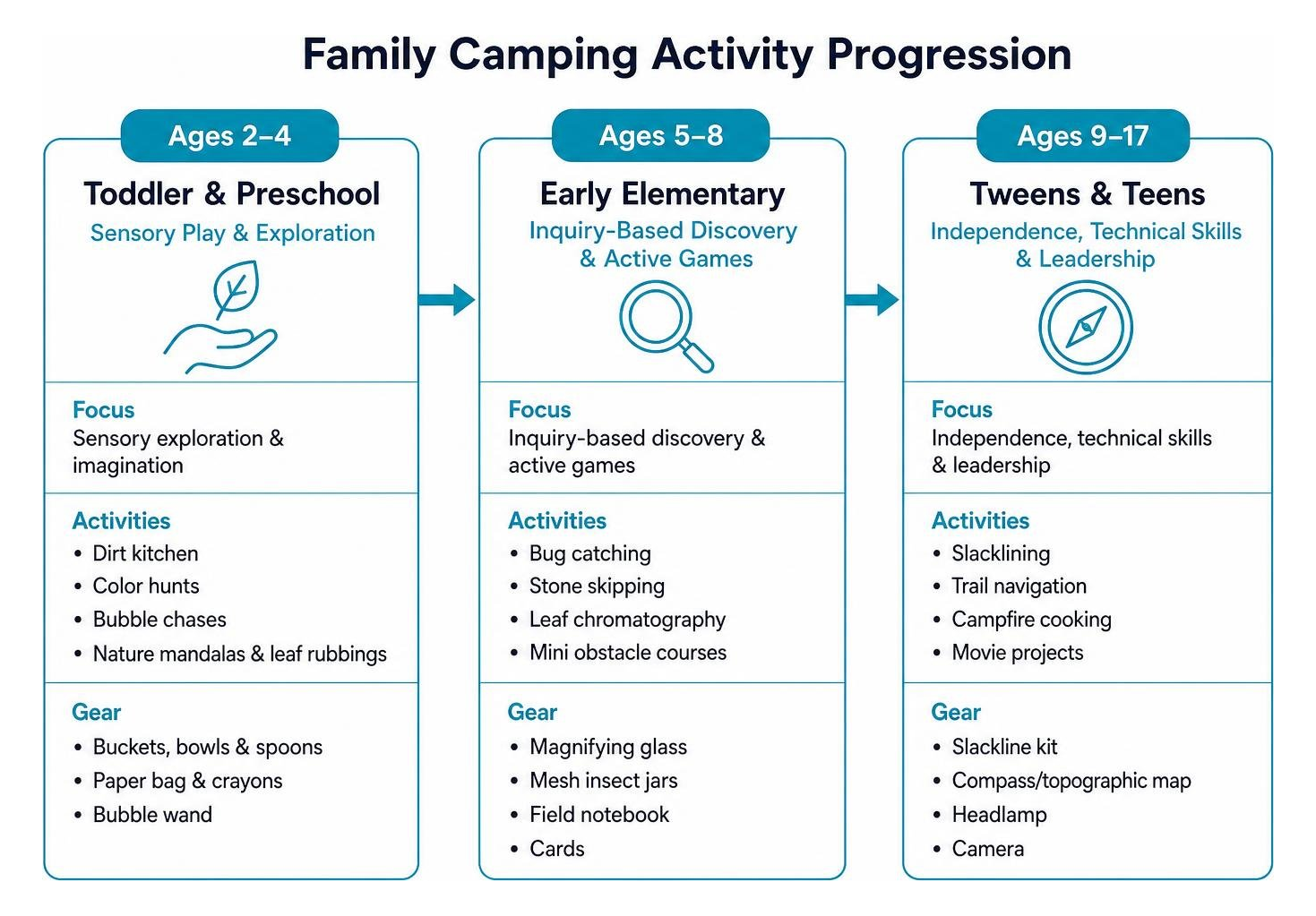
When planning camping activities for families, the most reliable approach is the age-first framework. Children at different developmental stages interact with nature in distinct ways. Toddlers rely on tactile sensory input, elementary schoolers thrive on curiosity-driven challenges, and teenagers seek autonomy and real-world utility. Attempting to force a single complex game across all ages often leads to frustration, whereas matching simple activities to developmental abilities keeps everyone engaged.
| Age Tier | Developmental Focus | Top Camping Activities | Essential Activity Gear |
|---|---|---|---|
| Toddlers & Preschool (Ages 2–4) | Sensory exploration & motor play | Dirt kitchen, color matching hunts, stick figures, leaf rubbing | Unbreakable buckets, shovels, chunky crayons, bubbles |
| Early Elementary (Ages 5–8) | Inquiry-based discovery & active games | Bug catching, stone skipping, leaf chromatography, mini obstacle courses | Magnifying glass, mesh insect jars, field notebook, cards |
| Tweens & Teens (Ages 9–17) | Independence, technical skills & leadership | Slacklining, trail navigation, campfire cooking, movie projects | Slackline kit, compass/topographic map, headlamp, camera |
Toddler and Preschool Camping Activities for Families (Ages 2–4)
Little campers do not need elaborate entertainment setups. For young children, the campsite itself is a massive sensory sandbox. A bucket, a metal spoon, and a patch of clean dirt can occupy a three-year-old for nearly an hour.
- The Campsite Dirt Kitchen: Hand your toddler plastic bowls, measuring cups, and spoons. Encourage them to mix “pinecone soup” or “sand pies” using fallen needles, pebbles, and water from your washing station.
- Visual Color Hunts: Draw colored circles (red, yellow, brown, green, gray) on the side of a paper bag. Have your preschooler collect fallen items matching each color swatch without disturbing living plants.
- Bubble Chases: Bubbles are lightweight, pack easily, and provide instant outdoor joy across open clearings. Check out fun outdoor finds perfect for Las Vegas weather to stock versatile warm-weather gear before packing up the vehicle.
- Nature Mandalas and Leaf Rubbings: Collect flat fallen leaves and bark pieces. Place them under a sheet of printer paper and let your toddler rub a peeled crayon over the top to reveal the hidden textures and vein networks.
School-Age Games and STEM Exploration (Ages 5–8)
Children in early elementary school possess boundless physical energy paired with rapid scientific curiosity. They love games with mild structure, basic rules, and tangible discoveries.
- Picnic Table Leaf Chromatography: Turn your camp table into a field laboratory. Tear various green leaves into small pieces inside glass jars, add a splash of rubbing alcohol, and place a strip of coffee filter paper inside. As the liquid rises, watch it separate the hidden pigments (chlorophylls, carotenoids, and anthocyanins).
- Catch-and-Release Bug Jars: Equip kids with transparent insect containers or ventilated jars. Challenge them to find three distinct invertebrates (ants, beetles, rollie-pollies), sketch them in a notebook, and safely release them back where they were found.
- Campsite Obstacle Course: Use what is available around the site—stumps to step across, camp chairs to weave through, and low picnic table benches to crawl under—to build an active agility track.
- Stone Skipping Contests: If your campsite is located near an approved creek, lake, or shoreline, host a stone-skipping session to see who can achieve the most skips using smooth, flat skipping stones. To build your child’s confidence in local wildlife tracking, join an interactive guided nature walk and talk before heading into deeper backcountry spots.
Tweens, Teens, and Camp Leadership Roles (Ages 9–17)
Older kids and teenagers often resist forced family participation if an activity feels childish. The solution is granting genuine autonomy, physical challenge, and meaningful camp responsibility.
- Setting Up a Slackline: Stringing a 2-inch wide webbing slackline between two mature trees (using tree protectors) 18 inches above soft ground gives teenagers hours of independent balance practice and friendly competition.
- The “Movie Hike” Project: Rather than banning smartphones entirely, turn their technology into a creative asset. Task your teen with scripting, directing, and shooting a three-minute adventure movie or documentary trailer highlighting your family’s camping experience.
- Campfire and Navigation Leadership: Hand over real outdoor duties. Let teens study topographic trail maps, hold the compass on hikes, plan a foil-pack meal recipe, and safely learn the fundamentals of kindling layout and match lighting under adult supervision.
- Adventure Excursions: Plan day treks that incorporate physical challenges like trail scrambling or mountain biking. You can find inspiration across regional Nevada family outdoor excursions that match your older kids’ growing thirst for adventure.
Nature Exploration and Wilderness Skill-Building
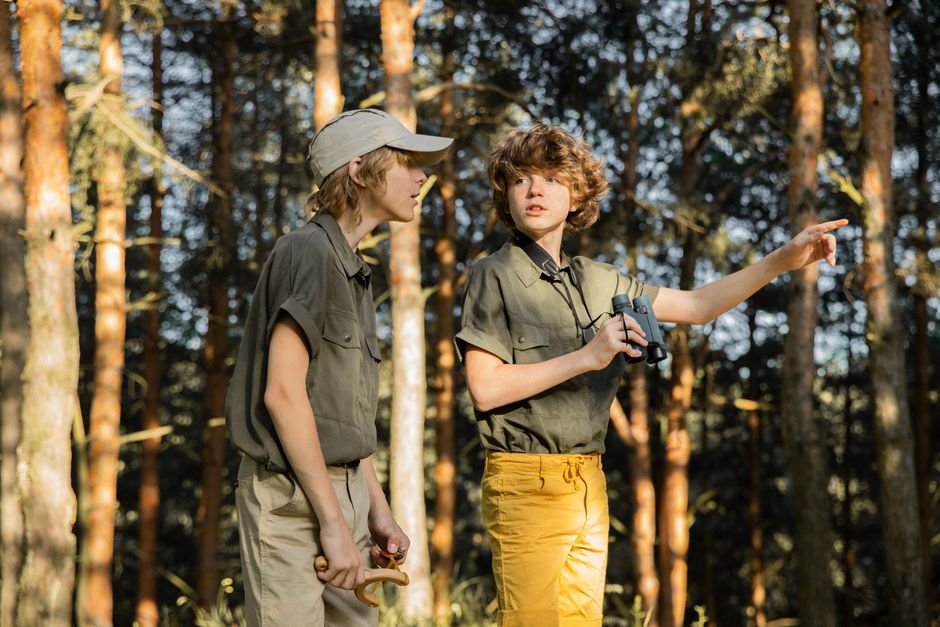
Exploring the natural ecosystem is the heart of every family campout. Structured wilderness exploration teaches kids environmental stewardship, situational awareness, and foundational navigation skills.
When taking kids into public lands, make outdoor ethics a core part of the adventure. Teach your children the 200-foot rule: all tents, cooking stations, dishwashing zones, and bathroom activities must remain at least 200 feet (approximately 70 adult paces) away from lakes, streams, and springs. Pacing out these 70 steps turns environmental conservation into a hands-on measurement game. Exploring wild spaces becomes second nature when you introduce your children to outdoor learning and Leave No Trace principles from an early age.
For families living in Clark County, testing out short day hikes before a multi-night camping trip is the best way to assess trail endurance. You can practice wilderness discovery across several secret nature escapes around Las Vegas to get everyone comfortable on unpaved terrain.
Interactive Trail Games and Scavenger Hunts
Hikes with kids can unravel quickly if the walking feels like a forced march. Incorporating interactive games keeps their focus sharp and steps lively:
- Trail Bingo / Photo Scavenger Hunt: Give kids a checklist of specific outdoor items: animal tracks in sand, a hollow log, a seed pod, a bird with yellow markings, or a rock resembling an animal shape. Allow them to check off items with a pencil or capture photos with a camera.
- Sound Mapping: Have everyone sit silently for three minutes on a trailside log with eyes closed. On a piece of paper, each person marks an “X” representing themselves in the center and draws symbols representing every sound heard (bird chirps, wind rustling leaves, buzzing insects, running water) in the direction it came from.
- The Trail Spotter Role: Designate a rotating “trail leader” whose job is spotting route trail blazes, cairns, and potential obstacles like loose gravel or low branches for the group behind them.
Campsite Chores Turned into Engaging Challenges
Camp setup and maintenance does not need to fall solely on parents. Kids actually love helping when chores are framed as team missions and skill-building challenges.
- The Kindling Dash: Challenge kids to gather three separate piles of fallen dry wood sorted strictly by size: matchstick-thin tinder twigs, thumb-thick kindling sticks, and wrist-thick fuel logs.
- Tent Stake Crew: Let older elementary kids use the rubber mallet to secure ground stakes into durable dirt, teaching them to drive stakes at a 45-degree angle away from the tent body for maximum tension.
- The “Clean Site” Sweep: Before leaving camp or heading to bed, run a five-minute family countdown to find every stray wrapper, dropped bottle cap, or piece of micro-trash around the perimeter.
Kid-Friendly Campfire Cooking and Evening Traditions
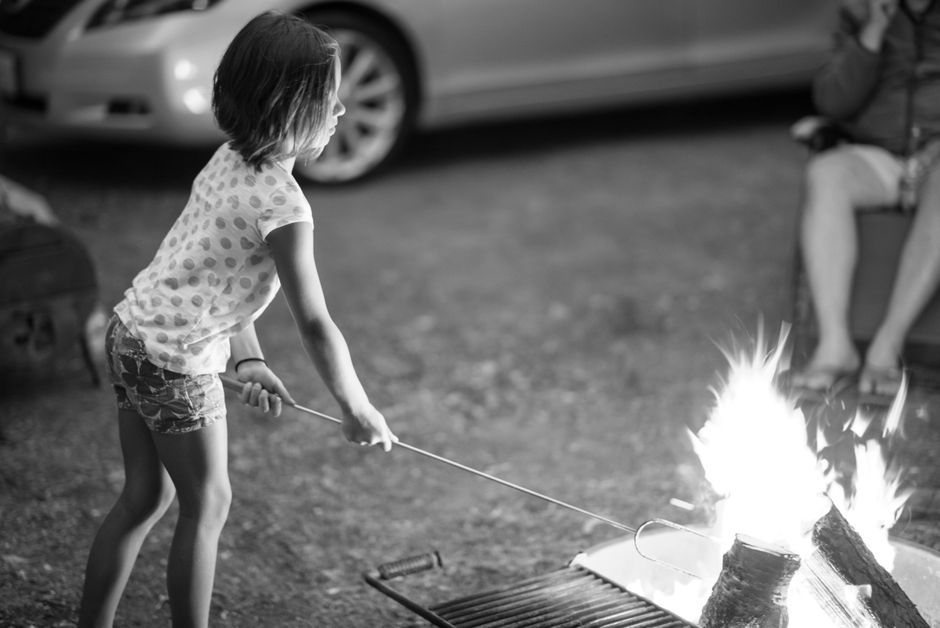
Evening around the fire pit creates the lasting memories kids carry into adulthood. Engaging children in campfire meal prep makes dinner interactive while teaching basic cooking safety.
Easy, Interactive Campfire Meals and Treats
Complex recipes with long prep times lead to hungry, impatient campers. Keep meals self-contained, customizable, and fun to assemble:
- Foil-Packet Campfire Dinners: Set out sliced potatoes, smoked sausage coins, ground beef patties, bell peppers, carrots, cheese, and seasoning. Let each child layer their preferred ingredients onto a heavy-duty square of aluminum foil. Fold and double-crimp the edges, then cook the packets directly over hot campfire coals for 20–25 minutes.
- Campfire Cones: A less messy and highly customizable upgrade to traditional s’mores. Fill a waffle ice cream cone with mini marshmallows, chocolate chips, butterscotch chips, diced bananas, and chopped strawberries. Wrap the cone tightly in foil and warm it on the fire grate or coals using tongs for 5–7 minutes until molten.
- Walking Tacos (Tacos in a Bag): Hand each family member an individual snack-size bag of corn chips or tortilla chips. Open the bag, crush the chips slightly, and spoon warm seasoned taco meat directly inside. Top with shredded cheese, diced tomatoes, lettuce, and salsa for an instant bowl-free dinner that creates zero dishes.
- Rolo S’mores: Swap standard flat chocolate bars for caramel-filled Rolo candies between your toasted marshmallows and graham crackers for a richer treat.
- The DIY Trail Mix Station: Set out bowls of whole grain cereals, pumpkin seeds, raisins, dried cranberries, pretzel sticks, and chocolate chips. Have kids scoop their personalized trail mix bags for tomorrow’s morning hike.
Nighttime Camping Activities for Families Under the Stars
Once the sun dips below the horizon, camp life transforms into an exciting nocturnal playground.
- Glow Stick Ring Toss: Crack several glow-stick necklaces to light up the night. Set three upright, water-filled clear bottles on a flat clearing and let kids toss the glowing rings over the bottle necks from five paces back.
- Night Sky Constellation Mapping: Download an offline astronomy app before your trip. Lie back on a ground tarp or sleeping pad and identify visible planets, passing satellites, and major constellations like the Big Dipper, Cassiopeia, and Orion.
- Campfire Story Chains: One person starts a fictional tale with a single opening sentence (e.g., “The old compass in the hollow tree began to glow blue…”). Moving clockwise around the circle, each family member adds exactly one sentence to build a collaborative adventure tale.
- Tent Shadow Puppets: Place a single lantern or headlamp behind you inside the tent, casting hand silhouettes against the nylon tent wall for younger kids before tucking into sleeping bags.
Screen-Free Rainy Day and Tent Entertainment
Inclement weather or midday heat waves can occasionally push the family inside a tent or cabin for several hours. Having a dedicated bad-weather entertainment pouch avoids restless cabin fever.
- Camp-Themed Card and Dice Games: Pack classic, compact card games such as Uno, Exploding Kittens, Spoons, or Yahtzee. Card games take up virtually zero trunk space and deliver hours of round-table fun.
- Campsite Nature Trivia: Host a family quiz using nature facts learned on your hikes, identifying local animal footprints, state trees, and basic outdoor safety questions.
- Sleeping Bag Read-Alouds: Bring a compelling chapter book or mystery novel set in the great outdoors. Reading aloud inside cozy sleeping bags while listening to weather outside creates a warm, relaxing environment.
- Tent Charades & Word Games: Play verbal guessing games like Twenty Questions, Telephone, or Fortunately/Unfortunately that require no materials whatsoever.
If unpredictable weather cuts an outdoor trip short or you need backup plans while staying near urban centers, explore our curated guide on indoor activities for kids in bad weather across the valley.
Frequently Asked Questions About Camping with Kids
What is the 3-3-3 rule for family camping?
The 3-3-3 rule is a trip-planning framework designed to prevent travel exhaustion and setup stress when camping with children:
- Drive no more than 3 hours from your home to your campsite destination.
- Stay for at least 3 nights so your family can settle into a natural outdoor rhythm without feeling rushed by packing and unpacking.
- Arrive at your campsite by 3:00 PM to allow ample daylight for setting up tents, organizing sleeping gear, and preparing dinner before sunset.
How do you handle nap times and bedtimes in a tent?
Tent sleep routines require minor adjustments compared to home:
- Temperature Management: Shade your tent beneath trees or pitch an EZ-Up canopy directly over the tent rainfly to keep interior temperatures cool during afternoon naps.
- Layered Bedding: Temperatures drop rapidly overnight in outdoor environments. Use high R-value insulated sleeping pads beneath sleeping bags, and dress children in moisture-wicking base layers paired with fleece socks and beanies.
- Consistent Routine: Bring familiar comfort items from home (a favorite blanket, bedtime storybook, or stuffed animal) and use a battery-powered white noise sound machine to muffle ambient campground noises.
What should be included in a low-prep camping activity kit?
Keep a dedicated gallon-sized zip-lock bag or small plastic tote packed with these essential, budget-friendly activity supplies:
- 1 pack of chunky colored crayons and a drawing notebook
- 2 durable plastic trowels or hand shovels
- 1 bottle of bubble solution
- 1 deck of standard playing cards
- 1 pack of glow sticks and lightweight personal headlamps with extra batteries
- 2 small mesh insect collection jars
- 1 compact magnifying glass
- 1 roll of painter’s tape (ideal for creating quick tent games or labeling gear)
Conclusion
Family camping trips are among the most rewarding outdoor traditions you can build with your kids. By matching activities to your children’s developmental ages, leaning into a balanced three-window daily schedule, and involving everyone in camp life, you turn potential outdoor stress into effortless family bonding.
You do not need an uninterrupted list of nonstop games to have a successful campout. The most cherished outdoor memories often blossom during unstructured downtime—watching campfire embers rise, skipping stones across open water, or spotting constellations through the mesh roof of your tent.
Ready to find your family’s next favorite nature getaway or scenic basecamp? Explore the best local parks and outdoor destinations across Southern Nevada to plan your next memorable outing!



Search
Latest Posts
What are you interested in?
