

Start With Safe DIY Haunted House Ideas for Kids
The best DIY Haunted House Ideas for Kids use everyday supplies, mild surprises, and a clear, well-lit path. Start small: turn a cardboard box, hallway, playhouse, or table into a spooky scene with friendly ghosts, paper bats, cotton cobwebs, and battery-powered LED lights.
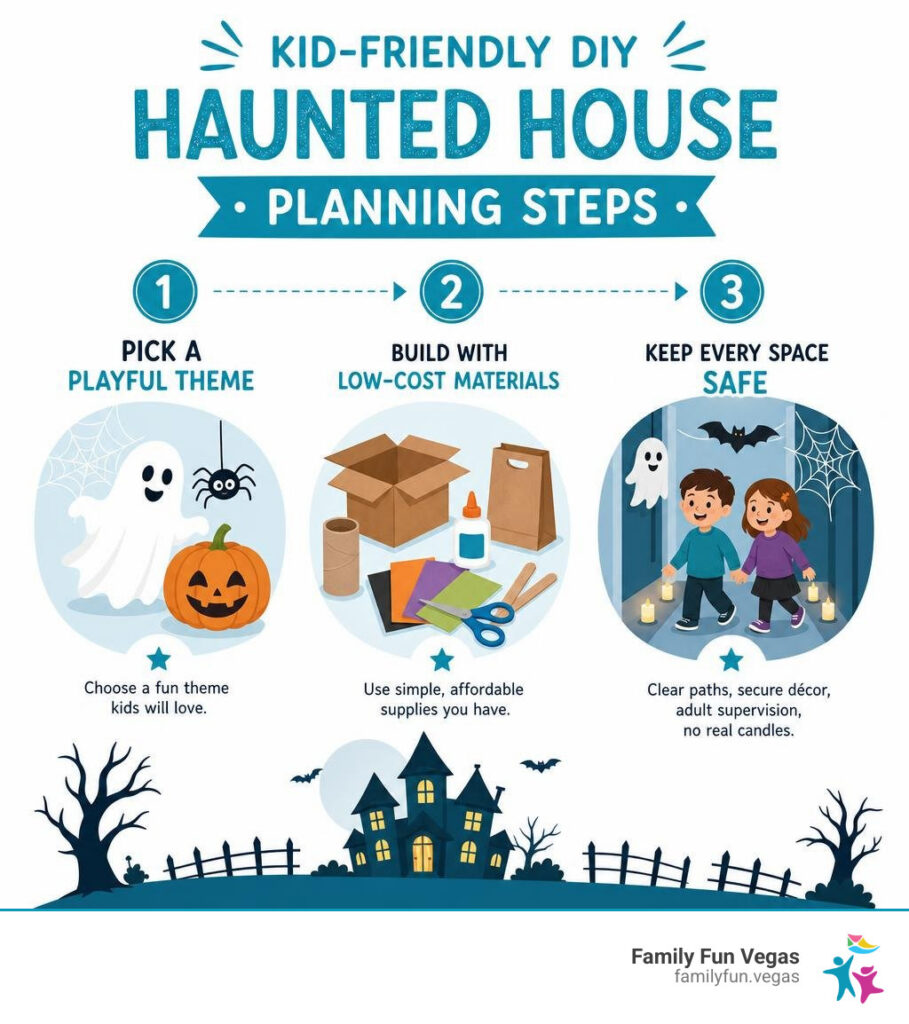
For a quick setup, follow these three rules:
- Pick a playful theme, such as a glowing pumpkin patch, friendly ghost house, or silly spider lair.
- Build with low-cost materials like boxes, paper bags, toilet paper rolls, craft sticks, and construction paper.
- Keep every space safe with clear walkways, secured decorations, adult supervision, and no real candles.
A kid-friendly haunted house does not need blood, jump scares, or expensive props. A few handmade details and an activity like a yarn spider-web obstacle course can turn an ordinary afternoon into a Halloween memory.
Safe and Spooky DIY Haunted House Ideas for Kids at Home
Creating a home haunt for children is all about balancing the thrill of the spooky season with a warm, welcoming environment. Did you know that roughly 60% of Americans think their house is haunted? When October arrives in Clark County, we can turn that playful belief into pure fun for our little ones.
The secret to keeping things magical rather than terrifying is avoiding dark psychological frights, gore, or aggressive animatronics. Focus on whimsical storybook elements: grinning skeletons, glowing jack-o’-lanterns, pastel bats, and goofy ghosts. When you design kid-friendly haunted house setups, you offer children the excitement of an adventure where they always feel secure.
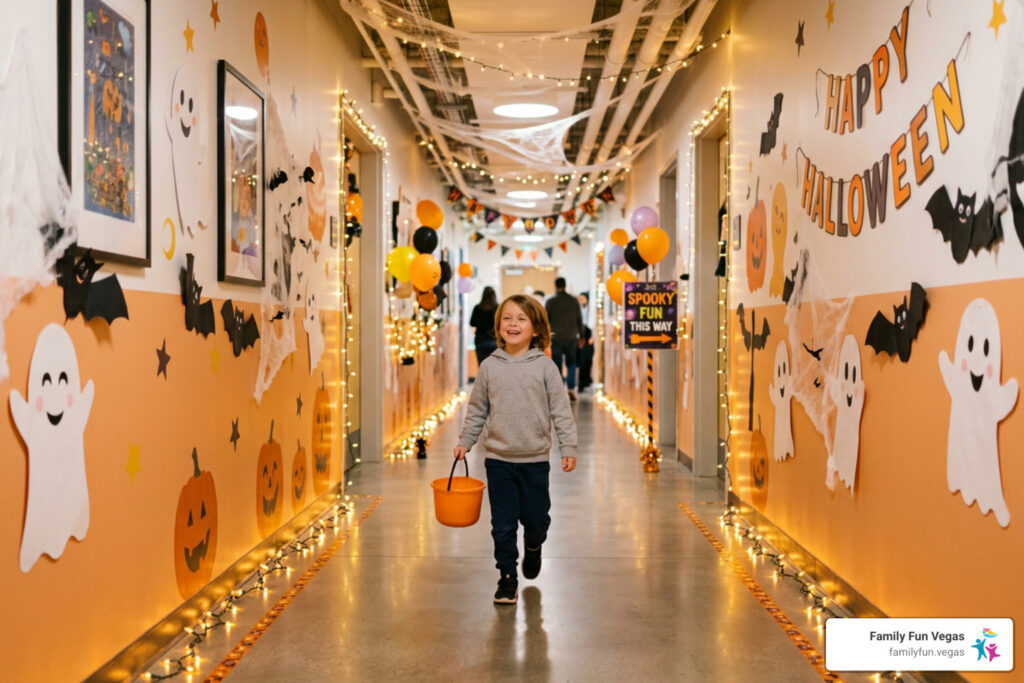
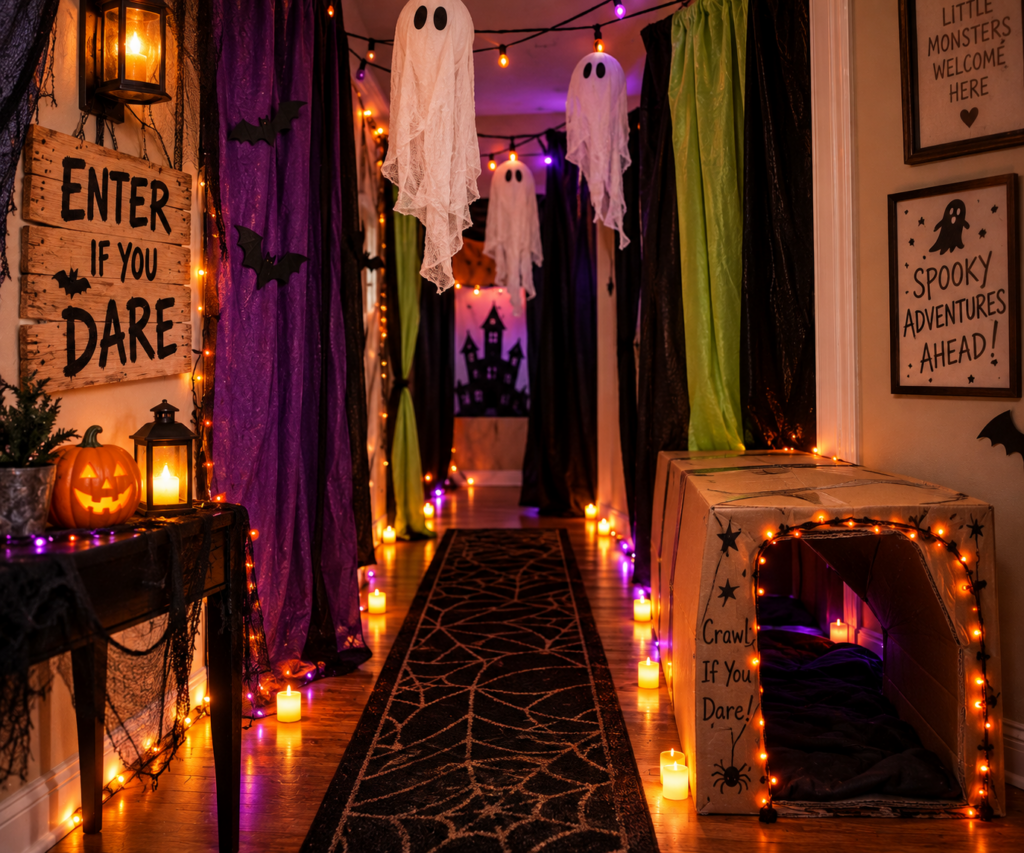
Indoor Walkthrough DIY Haunted House Ideas for Kids
You do not need a massive budget or an empty warehouse to build an unforgettable walk-through experience. A standard home hallway, living room corner, or entry corridor works beautifully.
Here is how you can transform an ordinary hallway into a magical adventure:
- Tension-Rod Draping: Hang dark purple, lime green, or black dollar-store bedsheets and shower curtains using temporary tension rods. This instantly alters the feel of the hallway.
- Cardboard Tunnels: Open up large moving boxes at both ends, tape them together with heavy-duty duct tape, and create crawl-through tunnels. Young children love the tactile excitement of crawling through an enchanted passageway.
- Ambient Dollar-Store Lighting: Line baseboards with warm LED tea lights or battery-powered orange and purple string lights. Never leave an indoor path completely pitch black.
- Floating Paper Ghosts: Hang white tissue paper tassels or inflated white balloons draped with cheesecloth from the ceiling using low-tack painter’s tape.
For extra inspiration on repurposing household goods into interactive scenes, check out these creative 12 DIY Haunted House Ideas on a Budget. You can craft faux tombstones out of cereal boxes or transform oatmeal canisters into gnarled, friendly storybook trees that hand out stickers. If your family loves getting into the spirit of Halloween, these low-cost setups deliver huge smiles.
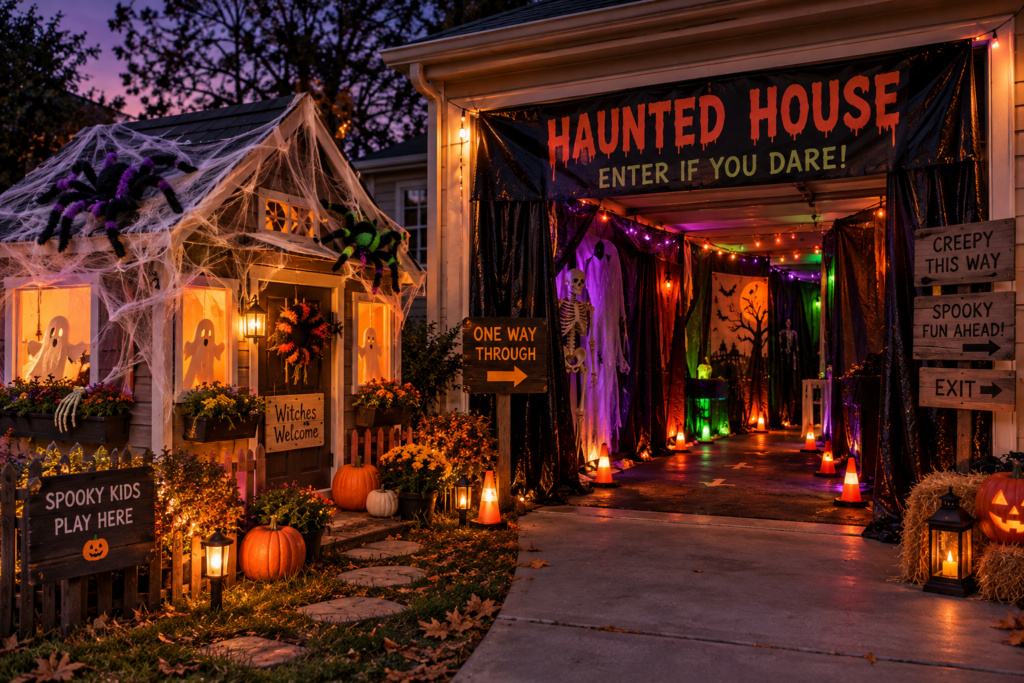
Backyard Playhouse and Garage Haunted Walkthroughs
If you prefer to keep the spooky fun outside, your backyard playhouse or garage makes a fantastic staging ground.
For a playhouse transformation, treat the structure like a mini witch’s cottage or friendly monster clubhouse:
- Drape Weather-Safe Cobwebs: Stretch faux synthetic cobwebs over the roofline and window frames. Add oversized, colorful plush spiders around the front door.
- Add a Welcoming Porch Scene: Place mini foam pumpkins, battery-operated lanterns, and a lightweight skeleton hand emerging from the flower box.
- Window Surprises: Tape translucent ghost cutouts to the inside of the windows and place a safe amber LED puck light behind them so they softly glow when twilight settles.
For garages, establish a one-way, clearly marked walking loop using black plastic sheeting attached to free-standing PVC frames or weighted backdrop stands. Keep the garage door open at least a foot at the bottom (or fully open with decorative partitions) to ensure good air circulation and easy exit points for younger visitors.
Easy Tabletop and Recycled Haunted House Crafts for Every Age
Haunted house projects do not always need to fill an entire room. Tabletop crafting lets children practice fine-motor skills, practice spatial planning, and build their own miniature haunted worlds using recyclable goods.
| Craft Project Type | Recommended Age | Main Materials | Prep & Build Time | Fine-Motor Skills Practiced |
|---|---|---|---|---|
| Popsicle Stick Mansion | Ages 7–12 | Craft sticks, tacky glue, acrylic paint | 45–60 mins | Measuring, structural bracing, painting |
| Paper Roll Castle | Ages 4–8 | Toilet paper tubes, cardstock, markers | 30–40 mins | Scissor control, tube rolling, gluing |
| Paper Bag Haunted Villa | Ages 3–6 | Brown lunch bags, construction paper | 20–30 mins | Paper folding, shape pasting, coloring |
| Peek-a-Boo Paper House | Ages 2–5 | Heavy cardstock, crayons, stickers | 15–20 mins | Flap lifting, sticker placement, drawing |
Step-by-Step Popsicle Stick and Paper Roll DIY Haunted House Ideas for Kids
Building miniature wooden or cardboard mansions is a wonderful weekend project. Follow these steps to build two classic recycled crafts:
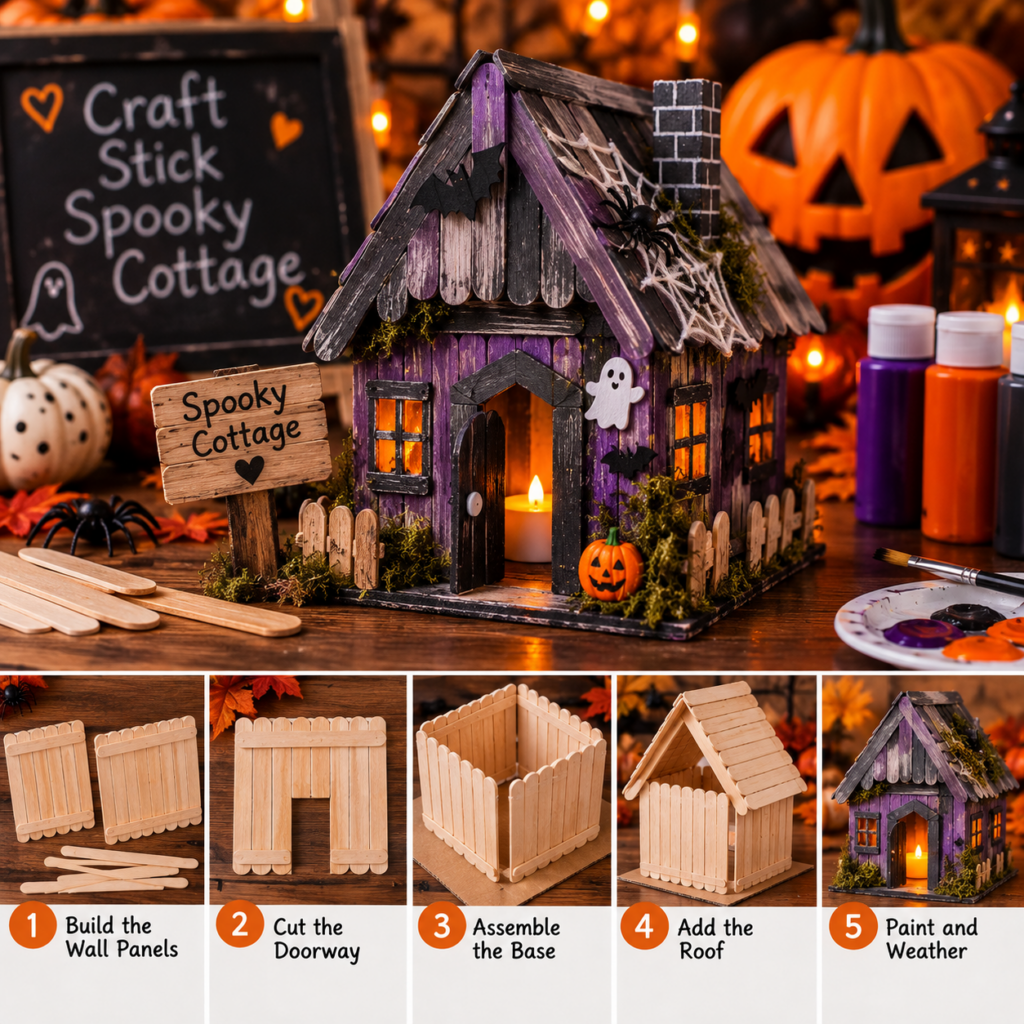
Project A: The Craft Stick Spooky Cottage
For a comprehensive overview of building wooden stick structures, check out this step-by-step popsicle stick house tutorial.
- Build the Wall Panels: Lay 10 to 12 natural jumbo craft sticks side-by-side on a flat surface. Glue two sticks horizontally across the back to lock them together. Repeat this to create three solid walls and one front wall.
- Cut the Doorway: On the front panel, trim out a 3-stick gap before gluing your support crossbeams. (Adults should score and snap the sticks with heavy-duty scissors or a craft blade).
- Assemble the Base: Glue the four wall panels upright onto a sturdy square cardboard base using quick-setting craft glue.
- Add the Roof: Glue pairs of sticks into two triangles, connect them with horizontal cross-sticks to form an A-frame roof, and secure it on top of your walls.
- Paint and Weather: Paint the house in shades of plum purple, slate grey, or pumpkin orange. Use a dry-brushing technique with white or black paint to give the wood an aged, weathered look. Pop a battery LED tea light inside the doorway to light it up!
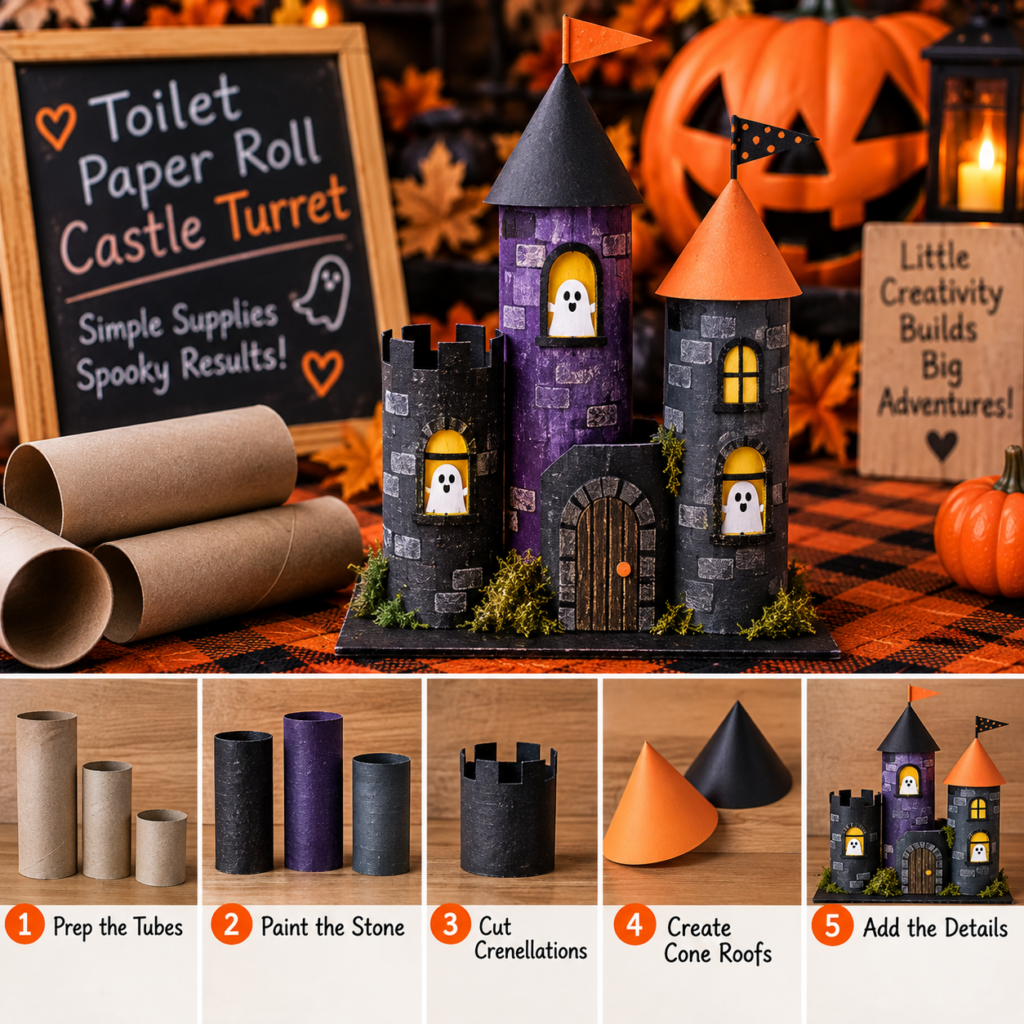
Project B: The Toilet Paper Roll Castle Turret
If you have leftover cardboard tubes, try making this toilet paper roll mini castle craft.
- Prep the Tubes: Take three cardboard rolls. Cut one roll down by two inches to create varied turret heights.
- Paint the Stone: Paint the tubes black, charcoal grey, or deep purple with non-toxic washable acrylic paint.
- Cut Castle Crenellations: Along the top rim of the shortest tube, cut small square notches to mimic classic castle ramparts.
- Create Cone Roofs: Cut 4-inch circles out of black or orange cardstock. Cut a slit to the center of each circle, overlap the edges into a cone, and tape or glue them atop the taller tubes.
- Add Character Details: Glue on yellow paper squares for windows and draw tiny friendly ghosts peering out. Glue the three tubes together on a cardstock base to create a multi-tower fortress.
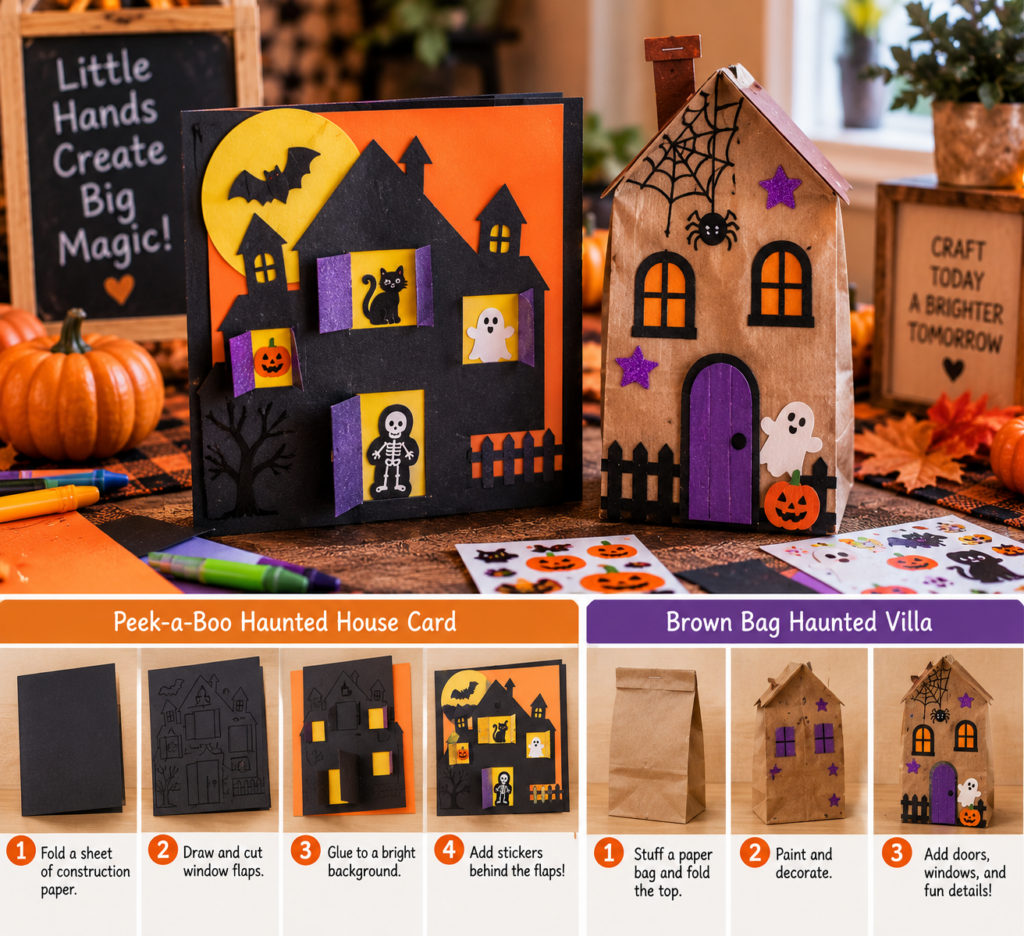
Foldable Paper Bag and Construction Paper Houses for Toddlers
For younger children who might find wood glue frustrating, paper bags and folded cardstock offer instant gratification and zero-risk crafting.
Try making an easy paper haunted house craft that doubles as a Halloween countdown calendar:
- The Peek-a-Boo Paper Sheet: Fold a black sheet of construction paper in half like a greeting card. On the front, draw a crooked manor. Cut three sides of several small windows and doors so they flap open. Glue the back sheet to a bright orange or yellow background. Inside each open flap, have your toddler place a sticker of a grinning cat, dancing skeleton, or cute bat!
- Brown Bag Haunted Villas: Open a standard brown paper lunch sack and stuff the bottom half with crumpled scrap paper so it stands upright. Fold down the top corners to form a triangular roof peak and staple it shut. Kids can paint the bag, glue on foam glitter stars, and paste precut cardstock doors onto the front.
Interactive Halloween Games and Sensory Stations
A great DIY haunted house is more than just visuals—it is an interactive playground. Adding game stations keeps children engaged and helps break up any nervous anticipation with laughter.
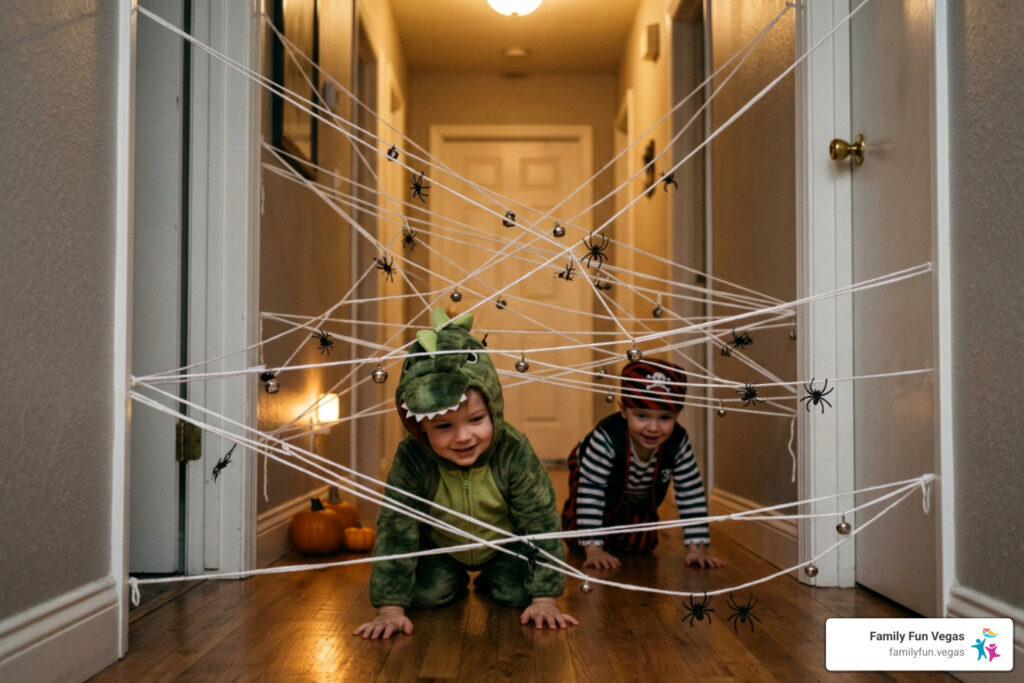
Try weaving these active, sensory-rich games into your walk-through:
- The Giant Spider Web Yarn Obstacle Course: Zig-zag white or neon yarn between hallway walls at various heights, taping them securely with painter’s tape. Clip plastic spiders and small jingle bells to the strands. Challenge kids to step, crawl, and duck through the “laser maze” without ringing the bells!
- Tactile “Monster Organ” Mystery Boxes: Cut hand-sized holes in tissue boxes and label them with silly, spooky titles. Fill them with child-friendly textures:
- Monster Brains: Cooked, cold spaghetti tossed with a drop of olive oil.
- Ghost Eyeballs: Peeled green grapes or chilled water beads.
- Mummy Fingernails: Dried pumpkin seeds or sliced almonds.
- Vampire Hearts: Peeled whole canned tomatoes.
- Cauldron Bean Bag Toss: Set up three plastic toy cauldrons on the floor. Assign point values (or candy prizes) to each, and let children toss mini plush pumpkins or bean bags into the bubbling brew.
Incorporating these activities pairs wonderfully with family traditions like neighborhood Trick or Treat outings or dressing up for a local Costume Contest.
Essential Safety Rules for a Kid-Friendly Haunted House
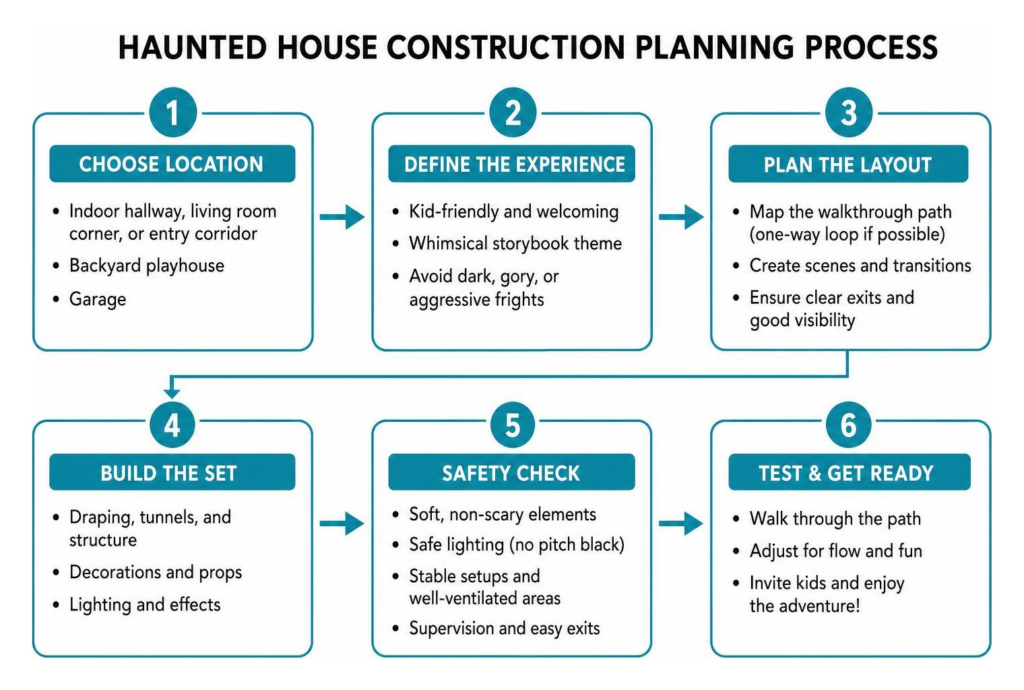
Safety is the cornerstone of any family event. Before welcoming little goblins into your DIY creation, review this safety checklist:
- Zero Open Flames: Never use real candles in jack-o’-lanterns, craft displays, or walkway paths. Use battery-operated LED puck lights, flame-free LED tea lights, or fairy lights.
- Maintain Wide, Flat Pathways: Hallways and room walk-throughs must be kept clear of tripping hazards. Keep all power cords taped down flush against baseboards using heavy-duty gaffer tape, and ensure floor rugs are non-slip.
- Ensure Adequate Visibility: Even a spooky maze must have enough ambient lighting for children to see where they are placing their feet. If a child gets nervous, have bright overhead lights ready to switch on immediately.
- Secure Suspended Props: Any bats, ghosts, or spiderwebs hanging overhead should be featherweight (paper, foam, or cotton) and fastened with low-tack painter’s tape so they safely release if tugged.
- Use Non-Toxic Supplies: Ensure all paints, glues, and tactile sensory elements are 100% non-toxic, skin-safe, and washable.
Frequently Asked Questions About Kid-Friendly Haunted Houses
What are the best non-scary haunted house themes for toddlers?
The most successful themes for toddlers rely on bright colors, recognizable characters, and cheerful settings:
- The Friendly Monster Salon: Use bright neon green, pink, and purple decor where funny, fuzzy monsters get their fur brushed.
- The Glowing Pumpkin Patch: Focus on smiling jack-o’-lanterns, paper sunflowers, hay bales, and warm golden lighting.
- The Ghostly Tea Party: Decorate with sheet ghosts wearing silly hats sitting around a toy table with plastic tea sets.
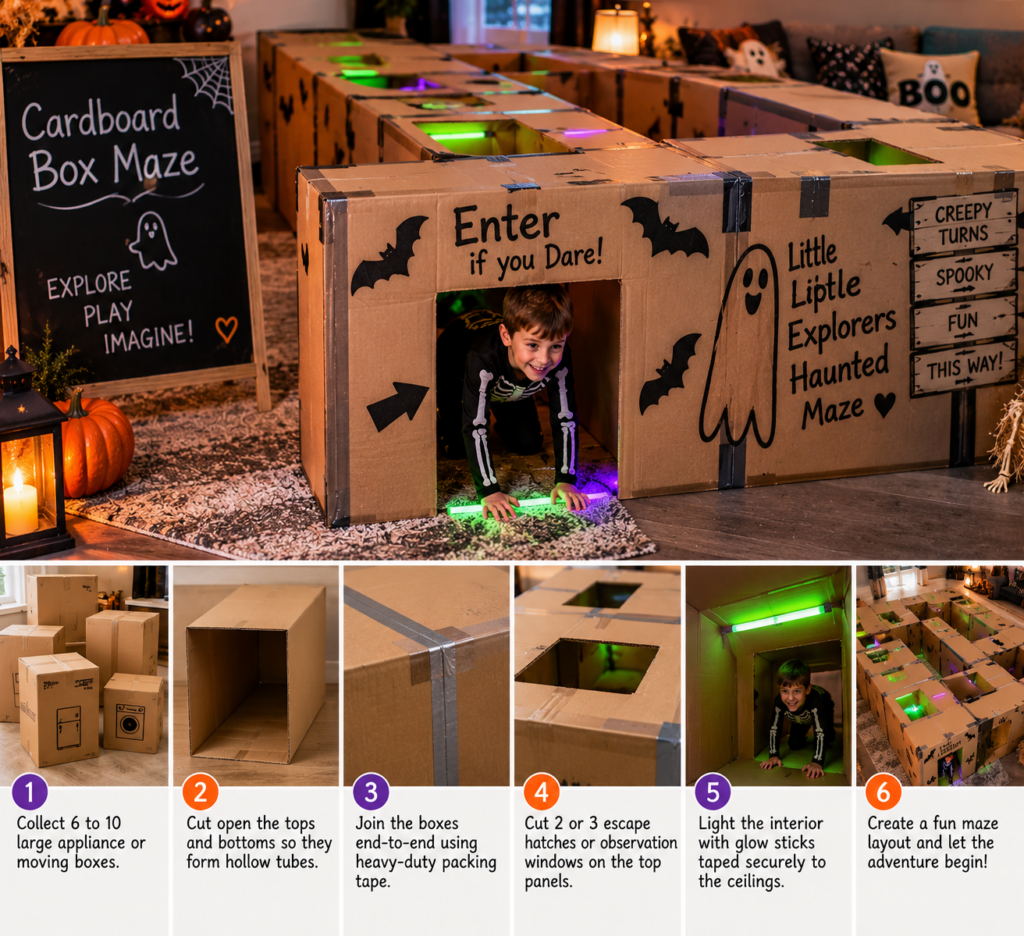
How do you build a sturdy cardboard box maze for children?
To build a stable cardboard maze:
- Collect 6 to 10 large appliance or moving boxes of similar height.
- Cut open the tops and bottoms so they form hollow rectangular tubes.
- Join the boxes end-to-end using reinforced heavy-duty packing tape along all inner and outer seams.
- For safety, cut 2 or 3 large escape hatches or observation windows on the top panels so parents can check on kids inside, and light the interior with glow sticks taped securely to the ceilings.
What lighting works best for safe indoor haunted walkthroughs?
The safest and most atmospheric lighting choices include:
- Battery-Operated LED Tea Lights: Perfect for lining floors and illuminating cut-out windows.
- Blacklight Bulbs & UV Reactive Tape: Replace a standard table lamp bulb with a blacklight and apply neon painter’s tape to obstacles for a glowing path.
- Purple & Amber Fairy Lights: These provide a rich autumn atmosphere while providing enough ambient visibility to prevent trips and stumbles.
Conclusion
At Family Fun Vegas, our mission is to help local parents make lasting memories with easy, stress-free seasonal ideas. Crafting your own home haunted house is a rewarding tradition that brings the whole family together to cut, paint, build, and play. Whether you turn a hallway into a yarn spider-web adventure or spend a cozy afternoon constructing craft-stick mansions, your kids will treasure the spooky memories you build together.
When you are ready to venture out for more festive inspiration around the valley, take a moment to explore family-friendly holiday craft events happening in our community!